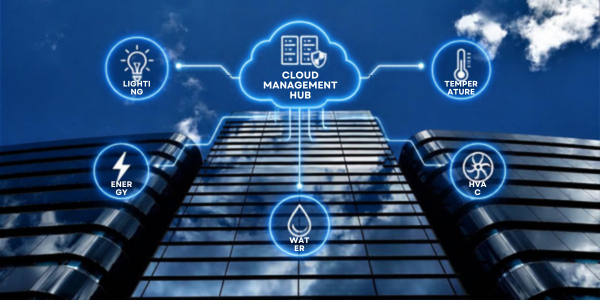
A cloud building management system can give building owners, facilities teams and contractors greater visibility and control over how a building performs. By connecting BMS data and controls to a secure cloud-based interface, authorised users can monitor systems remotely, analyse performance and respond more quickly when something needs attention.
For organisations already using a Building Management System, moving some functionality to the cloud does not necessarily mean replacing what is already installed. In many cases, cloud-based technology can work with existing building controls, helping businesses gain more value from their current infrastructure while creating a platform for future improvements.
Here, we explain how a cloud-based BMS works and explore ten practical benefits for building owners and operators.
What is a Cloud-Based Building Management System?
Before looking at the benefits, it helps to understand what makes a cloud building management system different from a conventional BMS.
A traditional BMS typically uses sensors, controllers and software to monitor and regulate building services such as heating, ventilation and air conditioning (HVAC), lighting and other mechanical and electrical equipment. The user interface and associated data may be hosted locally on equipment within the building.
A cloud based building management system adds a secure cloud-connected layer. Depending on the system and configuration, authorised users can access information, alarms, trends and controls through an internet-connected device without needing to be physically present at the building.
This approach can be particularly useful for businesses operating several buildings or for facilities teams that need greater oversight without travelling between sites.
It can also be introduced as part of a hybrid approach. At Cube Controls, we work with both new and existing Building Management Systems and can integrate technologies from different manufacturers where this provides the most practical solution.
Key Benefits of a Cloud-Based Building Management System
Once building information is securely available through the cloud, the BMS can become a much more accessible management tool.
1. Remote Access and Control with Cloud BMS
One of the clearest benefits is the ability to monitor a building without being on site.
Authorised users can review operating conditions, investigate alarms and, where the system permits, adjust settings remotely. This can help facilities managers respond more quickly and avoid unnecessary journeys simply to check the BMS.
Consider a facilities manager responsible for three commercial properties. An alarm appears overnight showing an unexpected HVAC condition at one location. Rather than travelling immediately to the site, the manager or BMS specialist can first examine the relevant system information remotely and determine what action is required.
For organisations managing multiple properties, this centralised visibility can be one of the most valuable features of a cloud building management system.
2. Scalability and Flexibility of Cloud BMS
Remote access becomes even more useful as an estate grows or changes.
A cloud-connected platform can make it easier to bring additional buildings, systems or monitoring points into the wider building management strategy. This can support businesses that acquire new premises, expand existing facilities or want more consistent oversight across a property portfolio.
Importantly, scalability does not mean every building needs to operate in exactly the same way. A well-designed BMS should reflect each property’s equipment, occupancy patterns and operational requirements.
The aim is to provide consistent visibility while retaining the flexibility to control each building appropriately.
3. Energy Efficiency and Cost Savings
Better visibility also creates opportunities to identify unnecessary energy consumption.
A BMS can monitor how equipment operates over time, helping teams identify situations where heating, cooling, ventilation or lighting is operating when it is not required. Controls can then be reviewed and adjusted around actual building use.
For example, trend data might show that an air-handling system regularly starts several hours before a building becomes occupied. Reviewing the control strategy could reveal an opportunity to reduce unnecessary running time while still achieving comfortable conditions before occupants arrive.
This is where discussions about cloud building management system cost need to consider more than the initial investment. The commercial case should also examine the potential operational benefits, including improved energy management, fewer unnecessary site visits and more efficient use of plant.
For a wider overview, see Cube Controls’ guide to Building Management System benefits.
4. Advanced Data, Analytics and Operational Insights
Energy improvement depends on understanding what the building is actually doing.
Cloud platforms can provide greater access to historic and current operating data, giving facilities teams more information for analysing trends, investigating unusual behaviour and gaining valuable operational insights.
Instead of seeing only the current temperature or equipment status, users may be able to review how conditions have changed over hours, days or longer periods. This can reveal patterns in plant operation, energy use, occupancy and environmental conditions that may not be obvious from day-to-day observation alone.
The value becomes even greater when BMS information is combined with IoT data. Sensors can add further detail around factors such as occupancy, temperature, humidity, air quality or equipment performance, depending on the application. Bringing these data sources together can give facilities teams a much clearer picture of how a building is being used and how its systems are responding.
This can help identify recurring problems that might otherwise remain hidden. Persistent temperature deviations, unusual equipment runtimes or repeated alarms can all provide useful clues about how effectively the building is operating.
When comparing systems or reading cloud building management system reviews, it is therefore worth looking beyond the appearance of the interface. The quality, accessibility and usefulness of the data, and the operational insights that can be drawn from it, are just as important.
5. Enhanced Security Features
Greater connectivity must, however, be approached with appropriate security controls.
Any system that can be accessed through a network or the internet needs to be configured, maintained and protected appropriately. User permissions, passwords, software updates, network architecture and ongoing management all matter.
Cloud connectivity should therefore be considered as part of the wider BMS design rather than added without assessing the security implications.
Cube Controls has written extensively about this important area, including protecting Building Management Systems from cyber security risks and how ransomware can affect connected building systems.
The right approach is not to avoid connectivity, but to ensure it is introduced and managed responsibly.
6. Sustainability Benefits of a Cloud-Based System
Managing energy more carefully can also support wider sustainability objectives.
A cloud-based building management system can make it easier to see where energy is being used and where operating strategies could be improved.
That visibility is particularly valuable because inefficient performance is not always obvious to building occupants. Equipment can continue operating without causing an immediate complaint while still consuming more energy than necessary.
Regular review of BMS data can therefore help organisations identify waste, refine operating schedules and make better-informed decisions about optimisation work.
7. Improved Occupant Comfort
Efficiency should not come at the expense of the people using the building.
A well-configured BMS helps maintain suitable environmental conditions by coordinating systems such as heating, ventilation and cooling around the needs of the space.
Cloud-based monitoring can give facilities teams clearer visibility of conditions across different areas, helping them investigate complaints or unusual changes more efficiently.
For example, if occupants repeatedly report that one part of an office is too warm in the afternoon, trend information can help determine whether the issue relates to temperature control, plant operation, scheduling or another part of the system.
The objective is not simply to reduce energy consumption. It is to operate the building efficiently while maintaining appropriate occupant comfort.
8. Predictive Maintenance for Reduced Downtime
The same operational data can also improve the way maintenance is managed.
Traditional maintenance can sometimes become reactive, with attention only given to equipment after a fault has caused disruption. Better monitoring and trend analysis can help identify developing problems earlier.
Repeated alarms, unusual operating patterns or equipment that is struggling to maintain a setpoint can all indicate that further investigation is needed.
Remote access can also help BMS specialists diagnose some problems before visiting the site. Cube Controls’ BMS maintenance services, for example, can include remote system interrogation to support quicker fault diagnosis.
This does not remove the need for planned maintenance. Instead, it gives maintenance teams more useful information with which to prioritise work and reduce avoidable downtime.
9. Integration with Smart Building Technologies and IoT
Cloud connectivity can also provide a foundation for wider smart building integration.
Modern buildings may contain numerous systems and data sources, including HVAC controls, energy metering, occupancy sensors, lighting controls and Internet of Things (IoT) devices.
When IoT data is integrated with a good BMS cloud solution, it can add another layer of useful information. Rather than simply showing how plant is operating, the combined data can help building teams understand why certain patterns are occurring and where performance could be improved.
For example, occupancy data can be considered alongside HVAC operation to show whether heating, cooling or ventilation is running in areas that are lightly used or unoccupied. Environmental sensors can also provide additional context when investigating comfort issues or unusual energy consumption.
The best cloud building management system is therefore not necessarily the product with the longest feature list. It is the system that can be designed and integrated effectively around the needs of the building, while turning data into practical operational insight.
Open protocols and carefully planned integration can enable different technologies to work together while avoiding unnecessary duplication.
Cube Controls works across a range of Building Management System platforms and supports hybrid systems where combining existing and new technologies offers the most appropriate solution.
You can also read more about cloud-based Building Management Systems and their evolving capabilities.
10. Better Decision-Making Through Operational Insights
Ultimately, all these benefits come back to making better decisions about the building.
A BMS produces useful information about equipment operation, environmental conditions and energy use. A cloud-connected platform can make that information easier to access, compare and analyse.
When this is combined with data from IoT sensors and other connected systems, facilities teams can gain richer operational insights into how the building is actually performing. This can help highlight inefficiencies, unusual operating patterns and opportunities to improve control strategies.
This allows owners and facilities teams to move away from relying on assumptions. Instead, decisions about schedules, maintenance, optimisation and future investment can be informed by actual operating data and a clearer understanding of how the building is being used.
However, more data does not automatically produce a better-performing building. Someone still needs to interpret what the information means and decide what action should follow.
That is why system design, commissioning and ongoing review remain important. Cube Controls’ BMS design and consultancy service focuses on creating control strategies around the real operational requirements of each building rather than simply installing technology for its own sake.
Are There Any Disadvantages to a Cloud-Based BMS?
Those benefits make cloud technology attractive, but building owners should also understand the practical considerations.
A cloud-connected BMS relies on appropriate network connectivity and must be designed with cyber security in mind. Access permissions need to be managed properly, and organisations should understand how their data and system access are being handled.
There may also be subscription, licensing, integration or upgrade costs depending on the platform selected and the existing infrastructure within the building.
Compatibility is another consideration. Some older or proprietary BMS equipment may require additional integration work before cloud functionality can be introduced effectively.
For these reasons, choosing a system should start with an assessment of the building rather than a particular technology. Existing controls, future plans, security requirements and operational priorities all need to be considered.
Cube Controls also recommends considering security across the wider connected environment. Our article ‘When Everything Is Connected, Security Is Essential’ explains why this becomes increasingly important as building technology becomes more integrated.
Conclusion: Why Choose a Cloud-Based Building Management System?
A cloud building management system can give owners and facilities teams more convenient access to building information, better visibility across multiple sites and stronger data for operational decision-making.
It can support energy efficiency, occupant comfort, maintenance and smart building integration. Just as importantly, it can make an existing BMS easier to manage without necessarily requiring wholesale replacement.
But there is no single best cloud building management system for every building. The right solution depends on what is already installed, how the property operates, who needs access and what the organisation wants to achieve.
Cube Controls designs, installs, modifies and maintains bespoke Building Management Systems for commercial buildings across the UK. We work with new, existing and hybrid systems to develop practical solutions around each building’s requirements.
If you are considering a cloud based building management system, speak to Cube Controls about your current controls, operational priorities and future plans. We can help you assess the options and determine the most appropriate route for your building.