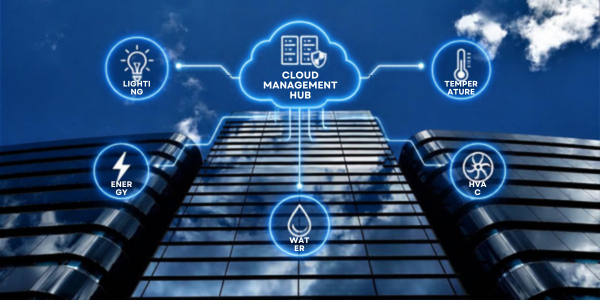
Modern commercial buildings are becoming increasingly complex. Heating, ventilation, lighting, security, power distribution and energy monitoring all need to work together to create efficient, comfortable and cost-effective environments. This is where integrated building management systems deliver real value. Rather than managing each building service independently, an integrated approach connects critical systems into a single intelligent platform, providing greater visibility, improved control and better operational performance.
Whether managing an office, healthcare facility, education campus or industrial site, building owners and facilities managers are under growing pressure to reduce energy consumption, improve occupant comfort and meet sustainability targets. Integrated Building Management Systems help achieve these objectives by enabling every major building system to communicate and respond intelligently.
At Cube Controls, we design, install and optimise bespoke Building Management Systems that give organisations complete control over their buildings while improving efficiency and reducing long-term operating costs.
What Is an Integrated Building Management System?
Understanding the technology makes it easier to appreciate its benefits.
An integrated building management system (iBMS) brings together multiple building services into one central platform. Rather than operating individual systems in isolation, the Building Management System monitors, controls and coordinates them using shared data and intelligent automation.
Unlike standalone building automation systems, an integrated solution allows equipment to work together. HVAC, lighting, security and access control, fire monitoring and energy management systems can all communicate in real time, allowing the building to respond automatically to changing conditions.
This creates a true smart building management system, where operators can monitor performance, adjust settings and identify issues from a single interface instead of managing multiple disconnected platforms.
For facilities teams, this means less manual intervention, faster decision-making and significantly greater visibility across the entire building.
Why Integrated Building Management Systems Are Essential for Smart Buildings
Once systems begin communicating, the entire building becomes more responsive.
Today’s smart buildings are expected to deliver far more than heating and cooling. Occupants expect comfortable environments, businesses want lower operating costs, and building owners need detailed operational data to support sustainability goals.
Disconnected systems make these objectives difficult to achieve. Separate software platforms often create duplicated work, slower fault diagnosis and inconsistent performance.
Integrated building management systems eliminate these barriers by creating a single source of operational intelligence.
For example, occupancy information collected through access control can automatically adjust HVAC operation and lighting levels. Energy usage can be monitored continuously, while alarms from multiple systems are prioritised through one dashboard instead of several independent applications.
The result is a more efficient building that reacts automatically rather than relying on manual intervention.
“A truly integrated Building Management System is not simply about connecting equipment. It’s about ensuring every building service works together to improve efficiency, reliability and occupant comfort,” explains Tony Williams, director of Cube Controls.
What Building Systems Can Be Integrated?
The real strength of integration lies in bringing multiple building services together.
HVAC Systems
HVAC integration is typically the foundation of every Building Management System. Heating, ventilation and air conditioning account for a significant proportion of energy consumption within commercial buildings.
By monitoring occupancy, outside air temperature, internal conditions and operating schedules, the BMS automatically adjusts plant operation to maintain comfort while minimising unnecessary energy use.
For organisations seeking better building energy management systems, intelligent HVAC control often delivers the fastest operational improvements.
Lighting Controls
Lighting systems can respond automatically to occupancy, daylight availability and programmed schedules.
Rather than leaving lighting fully operational throughout the day, integrated controls ensure energy is only used where required while maintaining comfortable working environments.
Energy Management Systems
Energy management systems for buildings provide detailed information about how energy is consumed across different areas and systems.
When integrated into the Building Management System, this data allows facilities managers to identify inefficiencies, compare trends, investigate abnormal consumption and make informed operational decisions.
Security and Access Control
Access control systems contribute valuable occupancy information.
Rather than simply restricting entry, access data allows other building services to respond intelligently. Areas that are unoccupied can automatically reduce heating, cooling and lighting, helping reduce unnecessary operating costs.
Fire and Life Safety Systems
Fire system monitoring can also be incorporated within an integrated platform.
Although life safety systems remain independently certified where required, integrating monitoring allows facilities teams to receive faster notifications and coordinate building responses more effectively during incidents.
How Integrated Building Management Systems Work Together
The greatest value comes from the interaction between connected systems.
Imagine a modern office building on a typical weekday morning.
Employees begin arriving using their access cards. The Building Management System recognises occupancy and automatically starts conditioning occupied areas. Lighting levels increase only where required, while ventilation adjusts according to demand.
Throughout the day, sensors continually monitor temperatures, indoor air quality and energy consumption. If meeting rooms become occupied unexpectedly, HVAC output automatically increases.
As staff leave in the evening, lighting switches off, heating reduces to setback temperatures and non-essential plant shuts down automatically.
If an air handling unit begins operating outside its expected parameters, the BMS alerts maintenance engineers before occupants notice any loss of performance.
This practical example demonstrates how smart building integration creates buildings that actively respond to occupancy and operational requirements instead of relying on fixed schedules.
The Benefits of Integrated Building Management Systems
These connected capabilities translate directly into measurable operational benefits.
Improve Energy Efficiency
One of the biggest advantages of integrated building management systems is improved energy efficiency.
By coordinating HVAC, lighting and other major plant, buildings avoid unnecessary energy consumption while maintaining comfortable conditions.
Continuous monitoring also allows inefficiencies to be identified much earlier than with manual inspections.
Enhance Occupant Comfort
Comfort is critical for productivity and user satisfaction.
Integrated control helps maintain consistent temperatures, improved indoor air quality and appropriate lighting levels throughout occupied spaces.
Instead of reacting to complaints, facilities managers can proactively optimise building performance.
Simplify Building Management
Managing multiple independent systems increases workload.
A single platform allows operators to monitor alarms, schedules, trends and equipment status from one interface, making day-to-day management considerably simpler.
Reduce Operating Costs
Improved efficiency naturally reduces energy costs, but integration also lowers maintenance expenditure.
By identifying equipment faults early and preventing unnecessary runtime, buildings experience fewer breakdowns and longer asset life.
Improve Fault Detection and Maintenance
Modern building automation and control systems generate valuable operational data.
Rather than waiting for equipment to fail, maintenance teams can identify abnormal performance early, allowing planned interventions that minimise disruption and reduce reactive callouts.
Support Sustainability Goals
As organisations work towards Net Zero objectives, accurate operational data becomes increasingly important.
An integrated smart building energy management system provides the visibility needed to reduce carbon emissions, monitor energy performance and demonstrate continual improvement across the building portfolio.
Retrofitting Existing Buildings with an Integrated Building Management System
Fortunately, integration is not limited to newly constructed buildings.
One of the biggest misconceptions surrounding integrated building management systems is that they can only be implemented in new developments. In reality, many existing commercial buildings can be upgraded without replacing every control system.
Modern Building Management Systems are designed to communicate using open protocols and can often integrate with existing HVAC equipment, lighting controls, meters, sensors and other building services. This allows organisations to improve building performance while protecting previous investments.
For example, a facilities manager responsible for a twenty-year-old office building may already have functioning HVAC plant but limited visibility of its operation. Rather than replacing the entire system, an integration project can connect the existing equipment into a modern Building Management System, providing centralised monitoring, improved scheduling, energy reporting and enhanced control.
This phased approach reduces disruption, spreads investment over time and allows improvements to be delivered where they provide the greatest operational benefit.
At Cube Controls, we regularly work with clients to assess existing infrastructure before designing bespoke integration strategies. Every building is different, which is why understanding current systems is an essential first step towards delivering long-term operational improvements.
Future Trends in Integrated Building Management Systems
As building technology continues to evolve, integration is becoming even more intelligent.
The future of smart building technology is driven by better data, greater connectivity and more advanced automation. Rather than simply controlling equipment, modern Building Management Systems are increasingly helping organisations make informed operational decisions.
Artificial Intelligence and Predictive Optimisation
Artificial Intelligence (AI) is beginning to enhance Building Management Systems by analysing operational patterns and identifying opportunities to improve efficiency automatically.
Instead of relying solely on fixed schedules, AI can recommend adjustments based on occupancy trends, weather forecasts and historical performance, helping reduce unnecessary energy consumption while maintaining occupant comfort.
Internet of Things (IoT)
Additional sensors are giving building operators greater visibility than ever before.
Connected devices can continuously monitor occupancy, indoor air quality, humidity, equipment performance and energy usage, providing valuable operational insight that supports more responsive intelligent building management.
Cloud-Based Monitoring
Remote access has become an increasingly valuable feature for facilities teams managing multiple sites.
Cloud-connected Building Management Systems allow authorised users to monitor alarms, review trends and make operational adjustments from virtually any location, improving responsiveness while reducing unnecessary site visits.
Predictive Maintenance
Rather than reacting after equipment fails, predictive maintenance uses operational data to identify developing issues before they become critical.
This helps minimise downtime, reduce repair costs and extend the lifespan of valuable plant and equipment.
Combined with ongoing optimisation, these technologies are shaping the future of smart buildings, where buildings continuously adapt to changing operational demands while supporting sustainability objectives.
Why Choose Cube Controls for Integrated Building Management Systems?
Selecting the right integration partner is just as important as selecting the right technology.
Cube Controls specialises in designing, installing and supporting bespoke Building Management Systems tailored to each client’s operational requirements.
Rather than offering one-size-fits-all solutions, we work closely with building owners, facilities managers, consultants and contractors to understand how each building operates before developing an integration strategy that delivers measurable improvements.
Our expertise includes:
- Building Management System design and consultancy
- Integration of new and existing building systems
- HVAC control design and optimisation
- Building energy management and efficiency improvements
- Commissioning, validation and ongoing maintenance
- Long-term optimisation and technical support
As we work across multiple Building Management System platforms, we can often integrate existing infrastructure rather than recommending unnecessary replacement.
Whether your objective is reducing energy costs, improving occupant comfort or gaining greater operational visibility, our experienced engineers can design a solution that supports your building both now and in the future.
Learn more about our Building Management System Design & Consultancy, explore our Building Management Systems or discover our guide to Integrated Building Management Systems.
Frequently Asked Questions
What is the difference between a BMS and SCADA?
A Building Management System (BMS) focuses on monitoring and controlling building services such as HVAC, lighting and energy systems within commercial buildings. SCADA (Supervisory Control and Data Acquisition) is more commonly used in industrial processes, manufacturing and utility infrastructure where large-scale process control is required.
What is the difference between a BMS and an integrated building management system (iBMS)?
A traditional BMS controls building services, while an integrated building management system connects multiple building technologies into a single coordinated platform. This enables greater automation, improved data sharing and more intelligent operational control.
What is the most common building management system?
There is no single standard Building Management System. Many organisations use open protocol platforms that support integration across multiple manufacturers, allowing greater flexibility as buildings evolve.
How much does a building management system cost?
The cost depends on the size of the building, the complexity of the systems being integrated and whether the project involves a new installation or an upgrade to existing controls. A professional survey is the best way to determine the most appropriate solution.
What are the benefits of an integrated building management system?
Integrated building management systems improve energy efficiency, reduce operating costs, enhance occupant comfort, simplify facilities management, support predictive maintenance and provide better visibility across all major building services.
Can existing buildings be upgraded with an integrated building management system?
Yes. Many existing commercial buildings can be retrofitted using existing infrastructure. Modern integration techniques allow older systems to communicate with new technologies, enabling organisations to improve performance without replacing every component.
Take Control of Your Building with Cube Controls
As commercial buildings become smarter and more connected, the value of integrated building management systems continues to grow. Bringing HVAC, lighting, energy management, security and other essential services together into one intelligent platform improves efficiency, reduces operating costs and creates better environments for occupants.
Whether you’re planning a new development, upgrading an ageing Building Management System or looking to improve the performance of an existing building, an integrated approach provides the visibility and control needed to make better operational decisions.
At Cube Controls, we combine technical expertise with a practical understanding of how buildings operate to deliver bespoke Building Management Systems that are reliable, scalable and designed around your requirements.
If you’re looking to improve your building’s performance through intelligent integration, contact Cube Controls to discuss your project with our experienced team.